
Crate training tends to come with a lot of emotion for new puppy owners. Nobody enjoys hearing a puppy protest or sound sad, and many people worry that using a crate is somehow “mean.” In reality, when done correctly, a crate becomes one of the most valuable tools you can give your Dachshund.
A properly introduced crate creates structure, helps with potty training, prevents unsafe chewing, and gives your puppy a secure place to rest. Most importantly, it teaches an incredibly important life skill: the ability to calmly settle alone for short periods of time.
For Dachshunds especially — a breed known for attachment, stubbornness, and dramatic opinions — crate training early matters.
Start With the Right Crate Size
One of the most common mistakes is choosing a crate that is too large.
Your puppy should have enough room to:
Stand up comfortably
Turn around
Lie down stretched out
But not enough room to use one end as a bathroom and sleep in the other.
Many wire crates come with divider panels, which are extremely helpful because they allow the crate space to “grow” with your puppy instead of purchasing multiple crates.
We personally use Kindtail “Pawds” in the small & medium sizes. My litters are introduced to these crates, open style, at just 4 weeks old. They use them as a den until they leave for new homes and we hope that gives them a headstart on the process. *My coupon code for 10% off is Lovebugdoxies
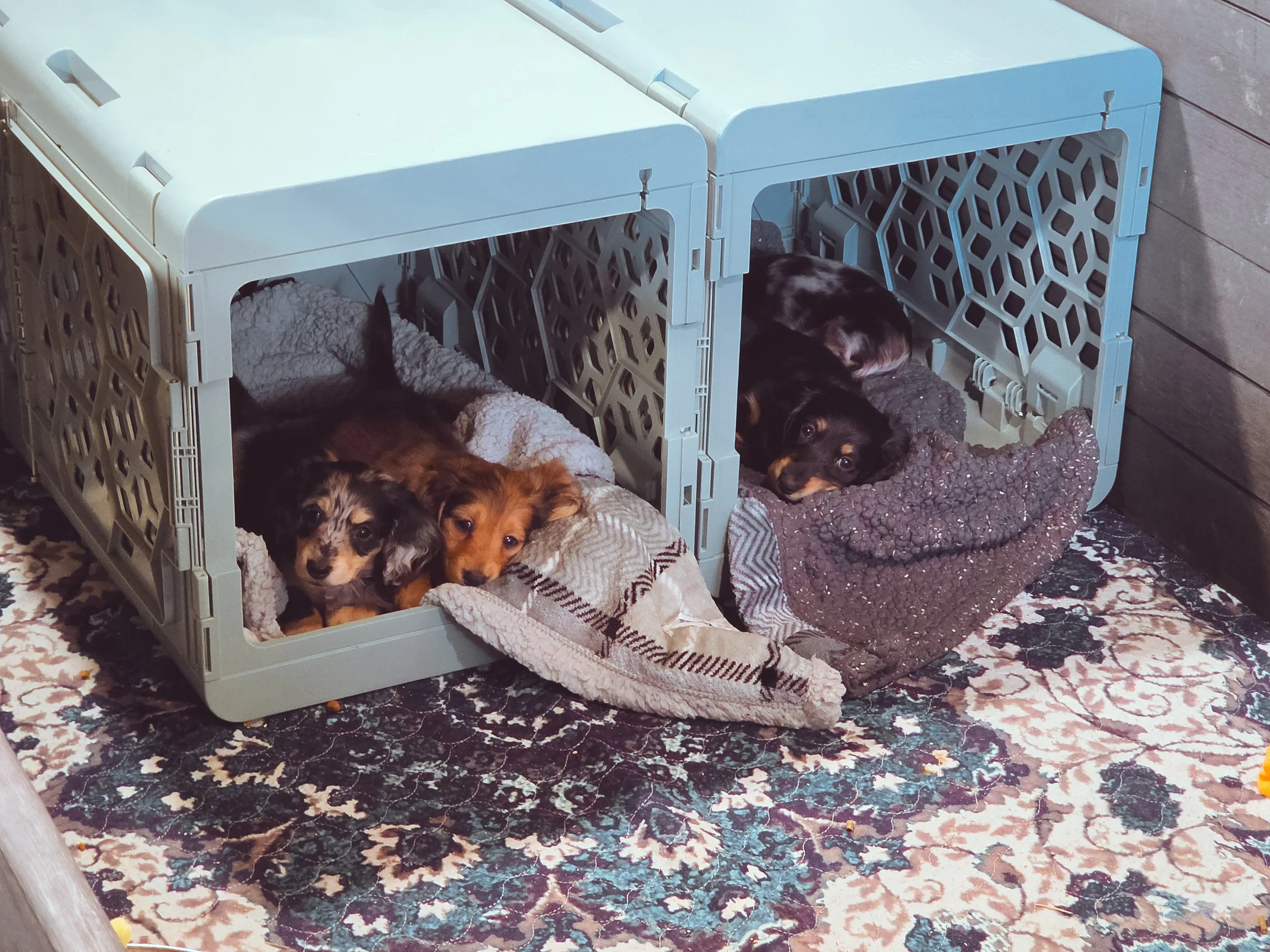
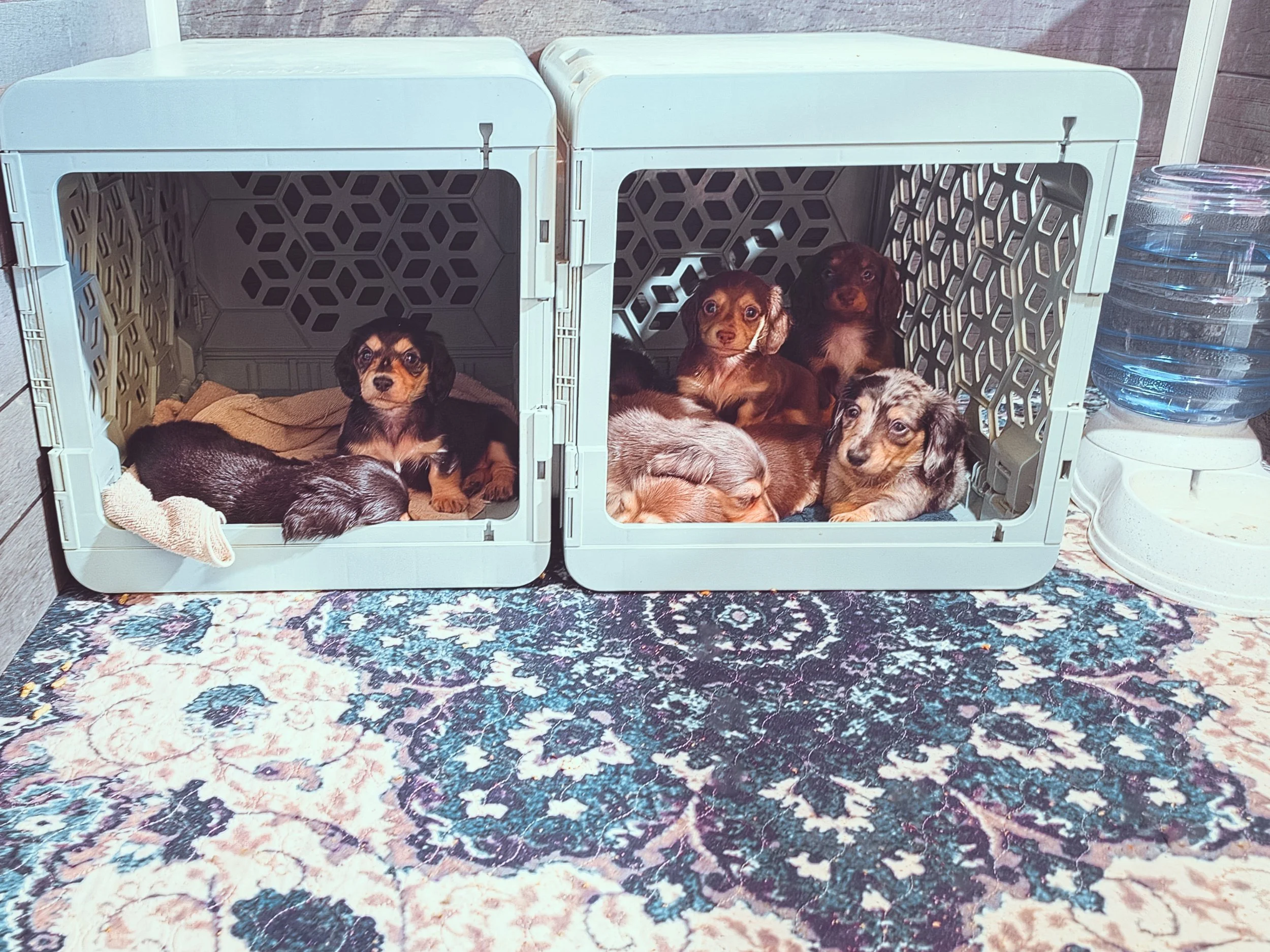
Bedding Should Be Comfortable and Washable
Accidents happen especially at the beginning. Choose bedding that washes and dries quick n easy. Keeping a rotating supply of towels or small blankets handy during this phase.
Avoid expensive plush bedding in the beginning. Puppies chew, spill water, and have accidents. Simple and washable is your friend.
Include Safe Comfort Items
A few carefully chosen comfort items can make the crate feel much less intimidating.
Many young puppies settle beautifully with a heartbeat stuffed animal. The rhythmic sound and warmth can help ease the transition from littermates to sleeping alone.
Appropriate chew toys help puppies stay occupied during crate time. This is especially important for teething dachshunds who believe every object on earth belongs in their mouth. *Avoid anything with small pieces.
An old shirt with your scent, or better yet, a blanket from the breeder with mom’s scent.
Dog’s utilize their noses a great deal, even the little guys. If you can get your hands on a blanket with their mom’s scent, it can be very comforting. I send one home with every puppy!
Interval Training Is The Secret
Start with:
The crate door open, tossing in a treat and letting puppy come n’ go freely, associating his crate with reward.
Progress by closing the door for brief instances, 5 seconds, 10 seconds, 1 minute, etc. Rewarding only calm quiet behavior.
Gradually increase duration as your puppy succeeds. Build the confidence and feelings of safety little by little.
Practice several of these short sessions each day
A puppy who only enters the crate for long periods or when everyone leaves the house may begin to associate it with isolation and frustration. Short, positive sessions throughout the day build confidence much faster.
Do Not Accidentally Reward Panic
Many owners unintentionally teach their puppy that crying immediately opens the crate door.
There is a difference between:
A puppy fussing briefly on n’ off before settling
A puppy in true distress shrieking, drooling, and clawing
Most puppies will complain a little while learning. That is normal. However, if every whine results in immediate release, the puppy learns that noise controls the situation. You will end up with a yapper and he will be the one in control.
This is often where owners fall victim to unnecessary guilt. They’re not going to die, you’re not breaking their heart, and they will not hate you. Stay strong and work through the process.
Teaching your puppy independence is part of raising a stable, confident adult dog. It does take time and practice though. A Dachshund that cannot tolerate short periods alone time often develops far more stress later in life than a puppy who was gently taught these skills early.
Crate Training Is Also About Safety
Many people focus only on potty training benefits and overlook another important reason crate familiarity matters: Emergencies.
At some point in your dog’s life, they may need to:
Stay overnight at a veterinary clinic
Recover from surgery
Travel safely
Be confined temporarily after an injury
Evacuate during an emergency situation
*This is particularly important for Dachshunds specifically because IVDD 100% requires crate rest. 1 in 5 Dachshunds will experience that eventuality. Back injuries, with or without needing surgery, typically require weeks of strict confinement for healing. It is completely essential to recovery.
A dog who has never experienced a crate may find these situations terrifying. A dog who already sees a crate as a normal, safe resting space handles these events with far less stress.
That familiarity can make an enormous difference during difficult moments.
Bedtime - The End Of a Busy Day
The first night is always the toughest, I know. I have raised so many sweet pups at this point. So I also know it does get better, espeically if you are practicing during the day and/or have had a headstart at the breeder’s house like mine do.
Prepare for bed by meeting their needs and tiring them out with some play.
Steps before bed should look like:
A good romp n’ play
One last drink
A final potty break
Crate & Lights Out
Where you place the crate can make a difference. The ideal location is dark, quiet, and out of view or ear shot of household action.
I know many people believe they should put the crate next to their bed. At the end of the day, that is really up to you. However, I find that pups that can see or hear me, take much longer to fall asleep.
The other question I am often asked regarding bedtime is “should I take them out in the middle of the night?” This is again, personal preference, but I don’t reccomend it. When we go to bed, its lights out in the puppy nursery, and I do not return until first thing in the morning.
Final Thoughts
Crate training is not about “locking a puppy away.” Crates are not “prisons.” It is about creating routine, safety, confidence, and structure.
When introduced patiently and positively, most dachshunds learn that their crate is simply their own little bedroom — a quiet place to rest, chew a toy, and relax.
And someday, when life throws an unexpected situation your way, you will likely be very grateful your dog already knows how to feel safe there.