
Whelper Helper - Litter Training
We use a puppy's natural instinct to leave the sleeping area when they need to eliminate to our advantage by utilizing litter training. This helps keep the whelping area more sanitary, easier to maintain, and gives pups a headstart for future housebreaking.
Between week 2-3, puppies begin to walk and leave their bed. At this stage, we introduce a litter tray directly beside their bed. The tray becomes the first surface they step onto when leaving the nest, encouraging them to use it in a very natural and automatic way. Early on, the litter tray occupies a large portion of the whelping area to make success easy and consistent.
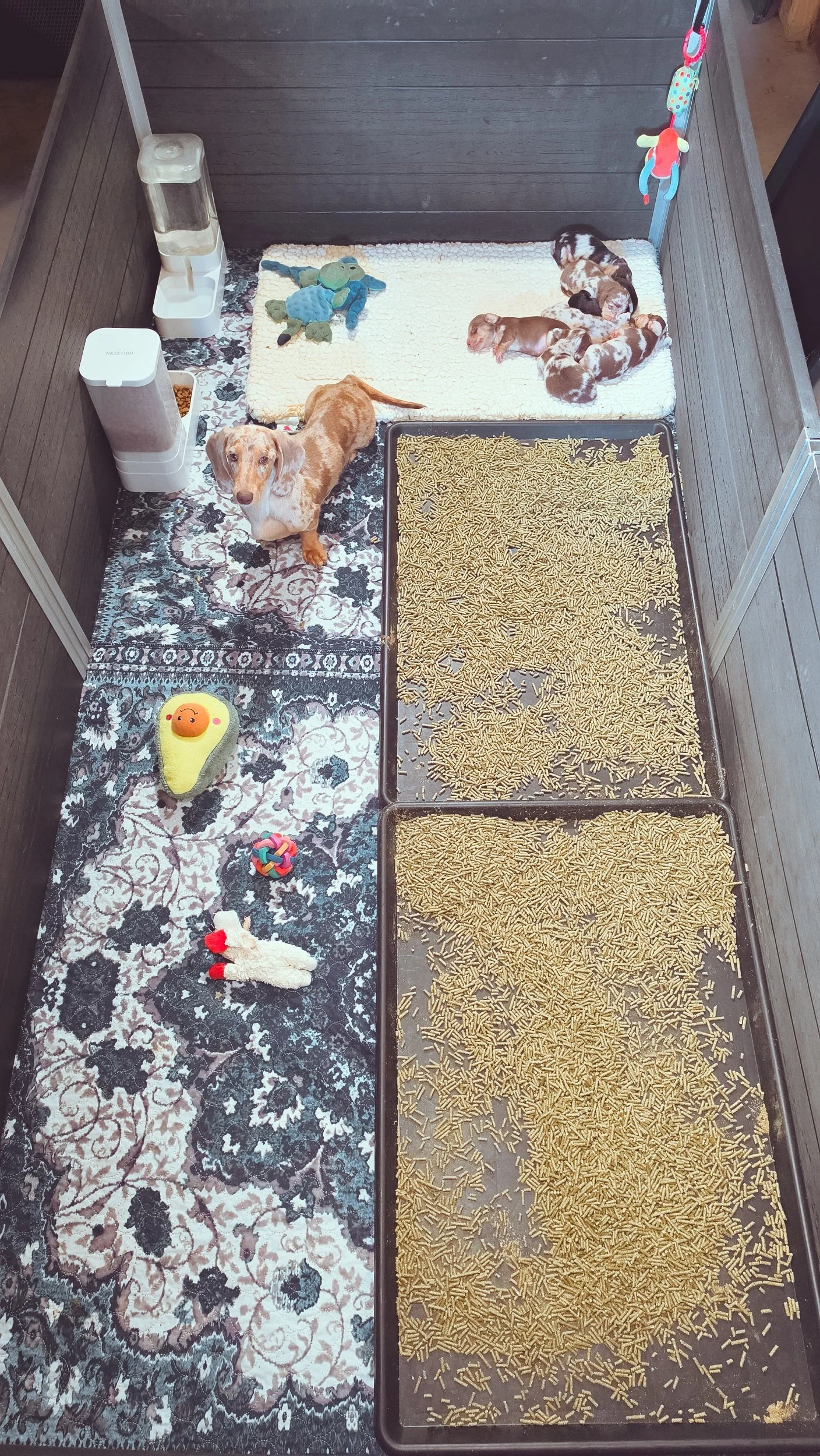
As the puppies grow and gain experience, the tray is gradually reduced in size and moved farther from the sleeping and eating areas. If the process is slow and steady, puppies are better at hitting the mark and traveling to the tray.
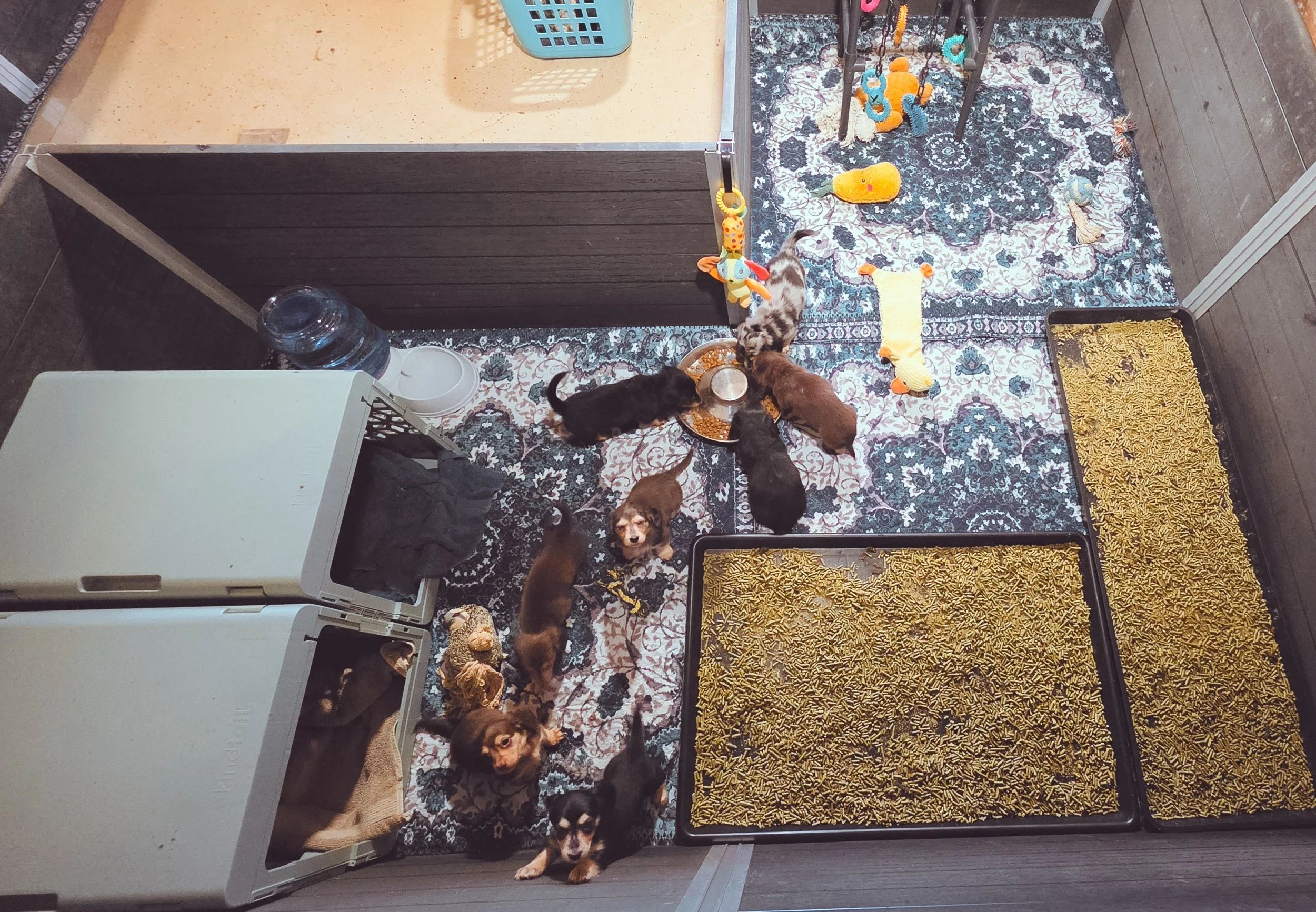
For Dachshund puppies and other toy breeds, the first trays must be very low to the ground so the little shorties can easily enter and exit. As their coordination improves, we transition to trays with higher sides, which do a better job of containing litter and keeping the area clean.
The key to successful litter training is early introduction and working with the puppy's natural instincts rather than against them.
We use alfalfa pellets as our litter material. While there are several suitable options available, alfalfa pellets have a scent that is similar to grass. Because grass typically becomes the preferred outdoor potty surface, this early scent association may help ease the transition to outdoor house training later on.
While no method creates a fully house-trained 8 week old puppy, early litter training establishes valuable habits and gives puppies a strong foundation before they ever leave for their new homes.